The Row N/S Park Tote Sizes Compared: Small vs Medium vs Large
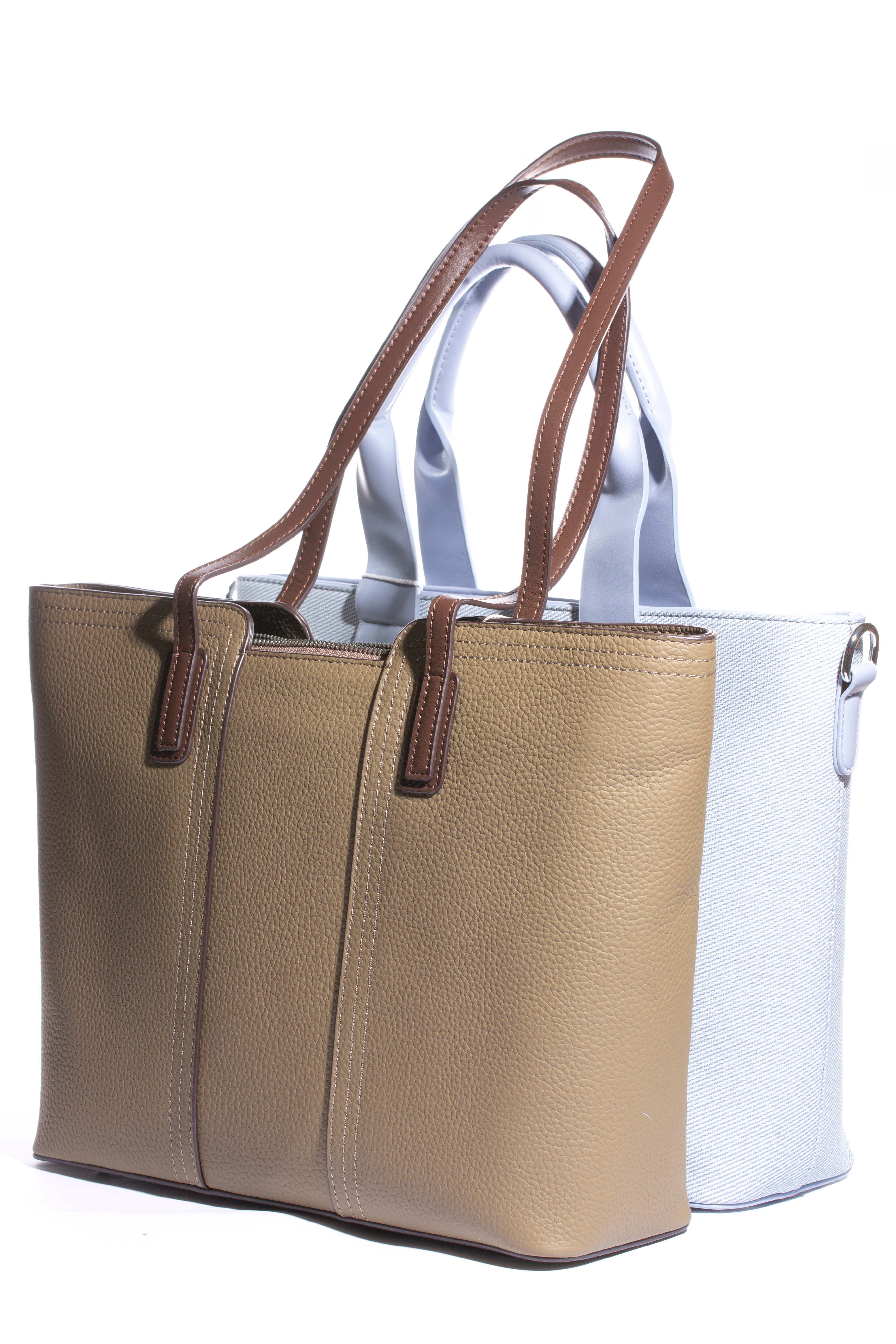
There is a moment, typically somewhere around the third time you lift one, when the N/S Park Tote stops reading as plain and starts seeming self-evident. Nothing on it performs: no plaque, no monogram, no contrast stitching angling to be photographed. What it has instead is a vertical proportion that stands on its own and handles set so the bag lies flat against your side. That is the full argument, and it has been sufficient to make this the catalogue’s least noisy success and, on the figures set out below, the brand’s most durable performer in the resale market. The hard part is not whether to buy one. The hard part is deciding between Small, Medium and Large, because all three are convincing in isolation and only reveal their differences once you have loaded them. The sections below walk through those differences alongside the prices observed in the market in 2026, which come from market observation rather than an official price list.
What the N/S Label Actually Changes
Read N/S as north-south: the bag is taller than it is wide, and that one orientation call drives everything else about how it carries. In a vertical tote the contents stack instead of spreading, which is why things remain findable instead of burying themselves in corners. The bag also rides closer to the body, a detail that matters more than it sounds on a busy street or a crowded train carriage. The trade-off is that anything genuinely wide, a large laptop turned sideways above all, pushes against the shape rather than settling into it. The brand uses this shorthand across several families and treats orientation as a specification rather than a styling note, which suits a house that names its bags by measurement instead of by mood. If you have only ever carried horizontal totes, the first week with a vertical one feels like unlearning a habit, and then like an upgrade.
The Small: Minimum Viable Bag
The Small is the size people misjudge in photographs and then buy anyway. It is built around the daily minimum rather than a laptop, which means a phone, a wallet, keys, sunglasses www.ysloutlet.org and a paperback rather than the kit of a working day. The vertical proportion means it takes more than a horizontal tote of similar footprint, and it still reads as tidy when half full. More than the other sizes it reads as a intentional object instead of a container, photographing as a shape rather than a bag full of things. There is a real compromise here, since the size will not survive overfilling without the line going, and overfilling any soft-sided tote is the quickest way to ruin one. In observed 2026 pricing the Small runs $1,550 to $1,620, which makes it the most affordable way into the silhouette.
The Medium: The Default Most People Should Choose
The Medium is the default recommendation, and it earns that place because it is the only size that does not force a trade. It absorbs a full day of belongings without losing its structure, which is the single most important quality in a bag that has no rigid frame holding it up. This is also where the vertical proportion pays off hardest, since the extra height opens up room for a bottle, a folder or a small camera without adding width against your body. On the shoulder it stays put, and in the hand it does not drag on the ground. By some margin it is the most versatile row bag in the entry-to-middle price band, and it is the one that ends up in use rather than in the dust bag. In observed 2026 pricing the Medium falls between $1,650 and $1,950, according to material and finish.
The Large: Capacity, With One Caveat
Treat the Large as a genuine work and travel bag and not a scaled-up accessory, because that is the purpose it should be bought for. A laptop, a notebook, a change of shoes and the miscellaneous debris of a commute all go in, and none of it brings the boxy rigidity that makes hard-sided work totes unpleasant to carry. Physics supplies the caveat: a larger soft tote depends more heavily on restraint, and a fully loaded Large will slump rather than stand. The price range opens dramatically here too, from $1,990 to $3,250 on 2026 market observations, which is a wider spread than the Small and Medium put together. If this is going to be your only The Row tote bag, it will see more daily use than either smaller size. Anyone adding it as a second bag next to a Medium will find it sits unused more often than they expect.
The Observed 2026 Prices, Size by Size
The three sizes ladder cleanly, and the gaps between them are smaller than the gaps within them. It is the detail most comparisons overlook, as the distance from the cheapest to the dearest Medium exceeds the distance from the cheapest Medium to the cheapest Large. Read the table as a chart of where each size starts and stops, because these are prices observed in 2026 and no master list is published by the brand. A narrow band on the Small says it is offered in a narrower set of executions. The wide band on the Large says the opposite. Every one of the three sits in the middle price tier of the collection, comfortably below the Margaux family and comfortably above the pouches and wallets.
| Size name | Observed 2026 pricing | Suits |
|---|---|---|
| Small | $1,550 to $1,620 | Daily minimum, evening use, the purest version of the shape |
| Medium | $1,650 to $1,950 | Daily carry, the default pick for most buyers |
| Large | $1,990 to $3,250 | Working days, laptops, travel, deliberate overcapacity |
Why a Single Size Spans Such a Wide Range
The spread within a single size follows material and finish rather than capacity, worth knowing before you assume a dearer Large is a bigger Large. Across the collection the exterior materials run from smooth, matte grained, saddle and polished calfskin through suede, canvas, nylon and woven sisal, and each of those carries a different price. On an identical silhouette elsewhere in the line, suede consistently costs more than calfskin, and stitched or edge-finished treatments add another increment. The same logic governs linings, where the house specifies nappa, lambskin, calfskin and cotton herringbone rather than a printed logo jacquard, materials with genuine cost behind them. Hardware is palladium-plated and finished matte or brushed throughout the collection, so it is not where the variation comes from. In practice you are picking a material at a given size, not paying for a better version of the same bag.
How the Rest of the Park Family Sits Around It
Knowing the neighbours matters, because the N/S Park Tote is one member of a family and the wrong pick gets expensive. The Park Tote itself is offered in Small and Medium at $1,450 to $1,620 in observed 2026 pricing, sitting just below the N/S on price. The Park Tote Three, counting its edge, stitch and canvas executions, runs $1,750 to $2,400 and suits anyone who likes the family but wants a visibly different construction. Above them is the XL Park Tote at $2,490, and a stitched XL has been observed at $4,570, a jump that is down to handwork rather than size. Underneath the whole group sits the N/S Park Crossbody at $1,290, the cheapest way into the shape language and a genuinely useful bag on its own terms. Between them the five cover very nearly every use case, which is why so many owners of one The Row bag end up buying a second.
The Verdict, Plus Resale and Care
The N/S Park Tote is more than a good bag, because it is also the strongest resale performer the brand has recorded. The Rebag CLAIR 2025 report has it at 146 percent value retention, the best of any model listed for the label, alongside a brand-level figure of 97 percent that put The Row into the report’s unicorn tier for the first time. That is observed market behaviour rather than investment advice, and it carries a qualification: canvas, nylon, sisal and seasonal-colour pieces routinely discount, and the strength sits in black and neutral leather. There is no brand-issued protocol, so care follows the material: buff calfskin with a soft dry cloth, brush suede and keep it away from water, and spot-clean woven versions only. Avoid overfilling any of the three sizes, and keep the bag lightly stuffed in its dust bag so the shape holds. Take the Small if you carry little, the Large if you commute with a laptop, and the Medium if you cannot decide, because the Medium is the one you will actually use.
- Small at $1,550 to $1,620: the shape at its purest and most sculptural
- Medium at $1,650 to $1,950: the default for everyday use
- Large at $1,990 to $3,250: work, travel and the widest material selection